
Disrespectful Teenager? What to Do Before a Consequence
Sep 03, 2026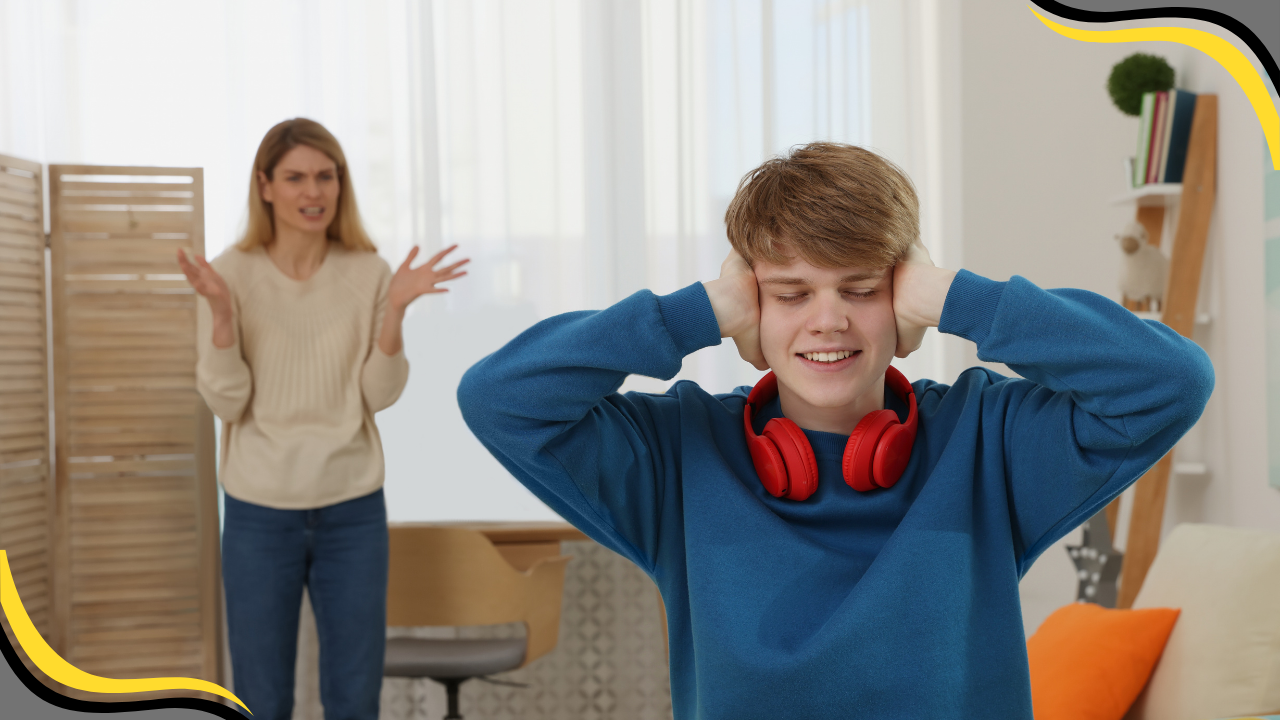
Your teenager rolls their eyes, calls you annoying, says “whatever,” or slams the door.
Your body reacts immediately.
You feel angry, hurt, unappreciated, and perhaps even powerless. One thought rises above everything else:
My teenager cannot speak to me this way.
Your first instinct may be to take away the phone, cancel the weekend, shut down gaming, or announce another consequence.
Teen disrespect should not be ignored. However, an immediate punishment is not always the response that will teach your teenager what you want them to learn.
In fact, when a consequence is given while both the parent and teenager are emotionally activated, it can turn one disrespectful comment into an all-night power struggle.
Before giving a consequence to a disrespectful teenager, use this three-step process:
Pause your reaction.
Sort the behavior.
Choose the response.
Your teenager’s behavior may require a communication redo, an opportunity to repair harm, or a connected consequence. The important work is determining which response fits the behavior.
Quick Answer: What Should You Do When Your Teenager Is Disrespectful?
When your teenager is disrespectful, remain as calm as possible, name the behavior briefly, and avoid making an immediate punishment while you are angry.
Try saying:
“I want to hear what you’re saying. I’m not willing to be spoken to that way. Let’s take ten minutes, and then we will try again.”
After the pause, determine whether your teenager was communicating badly while overwhelmed, using disrespect to avoid a responsibility, or engaging in harmful behavior that requires repair or a consequence.
Not every disrespectful moment needs a consequence.
Every disrespectful moment does need a response.
Why Does Teen Disrespect Feel So Personal?
Disrespect from a teenager rarely feels like “just behavior.”
It can feel like a rejection of everything you do as a parent.
You may think:
After everything I do, this is how I’m treated?
If I let this go, the behavior will get worse.
My teenager has no respect for me.
I’m losing control of my own household.
I need to show them that I am still the parent.
These feelings can be even more intense when you are parenting primarily on your own.
You may be managing school responsibilities, schedules, transportation, household expectations, emotional support, finances, and discipline without another parent standing beside you in the moment.
When your teenager openly challenges you, it can feel as though they are challenging the entire structure you are working so hard to maintain.
That emotional response is understandable.
However, there is an important distinction to make:
Disrespect describes how the behavior affects you. It does not necessarily explain what caused the behavior.
Your teenager may be overwhelmed, embarrassed, exhausted, disappointed, avoiding a responsibility, or fighting for independence in an unskilled way.
They may also have developed a pattern of using aggression or disrespect to push you away from a limit.
Understanding the reason does not excuse the behavior. It helps you choose the appropriate response.
Why Can Immediate Punishment Make Teen Disrespect Worse?
A consequence delivered in anger is often designed—without the parent realizing it—to make the teenager feel the seriousness of the parent’s anger.
The parent wants to regain control and send a strong message:
You will not treat me this way.
The problem is that the teenager may stop thinking about their own behavior and begin focusing entirely on the punishment.
The original problem disappears.
A conversation about homework becomes a fight about the phone.
A conversation about curfew becomes an argument about whether the parent is unfair.
A conversation about a household responsibility becomes a debate about the teenager’s entire social life.
The consequence has not necessarily taught respectful communication. It may only have created a new battle.
Pausing before deciding on a consequence does not mean you are being permissive.
It means you are making a deliberate parenting decision instead of an impulsive one.
Step One: Pause Your Reaction
Before responding to your teenager’s disrespect, notice what is happening inside your own body.
Ask yourself:
Is my heart racing?
Is my jaw clenched?
Is my voice getting louder?
Am I beginning a long lecture?
Am I bringing up everything my teenager has done wrong recently?
Am I about to threaten a punishment I may not enforce?
Do I want my teenager to feel as upset as I feel?
These are signs that you may need to pause.
You can say:
“I’m too frustrated to handle this well right now. I’m going to take ten minutes, and then we will come back to it.”
Make it clear that the pause is temporary.
A pause without a return can become avoidance. A pause with a return time is regulation.
If your teenager complains that you are bringing the issue up again, say:
“The issue still needs to be handled. I want to handle it without both of us making it worse.”
Your authority does not disappear because you refuse to react impulsively.
It becomes steadier.
Step Two: Sort the Behavior
Once you are calmer, determine what type of behavior occurred.
Ask:
Was this a rough delivery, an attempt to avoid a limit, or harmful behavior that requires repair or a consequence?
Was Your Teenager Overwhelmed and Communicating Badly?
Your teenager may be tired, anxious, disappointed, embarrassed, overstimulated, or overwhelmed.
They might say:
“Can you stop asking me questions?”
“You’re so annoying.”
“Just get out of my room.”
“Leave me alone.”
The delivery is not acceptable, but a traditional punishment may not be necessary.
Your teenager may need an opportunity to communicate the same feeling or request differently.
Say:
“I hear that you want space. You can ask for space without insulting me. Take a minute and try that again.”
Your teenager may sigh or respond without much warmth:
“Can I just have some space?”
That is still progress.
You are teaching that the feeling is allowed, the request is allowed, and the disrespectful delivery needs to change.
Is Your Teenager Using Disrespect to Avoid a Responsibility?
Sometimes disrespect is a way to pull the parent away from the original expectation.
You ask your teenager to put away the dishes.
They respond:
“Why are you so controlling?”
You begin defending yourself:
“I am not controlling. I do everything for you!”
The conversation becomes an argument about whether you are a good parent—and the dishes remain untouched.
Separate the disrespect from the original responsibility.
Say:
“I’m willing to hear what you think is unfair. I’m not willing to be insulted. The dishes still need to be put away before you move on to gaming.”
You are addressing how your teenager spoke to you without allowing the original boundary to disappear.
Was the Behavior Harmful or Unsafe?
Some behavior goes beyond an irritated tone, an eye roll, or a poorly expressed request.
Examples may include:
Repeated personal attacks
Threatening language
Physical aggression
Destroying property
Harassing another person online
Using a privilege in an unsafe way
Repeatedly violating an established safety agreement
These situations may require a consequence, repair, and possibly additional professional support.
If there is an immediate safety concern, prioritize creating physical space and obtaining appropriate support.
Step Three: Choose a Redo, Repair, or Consequence
Once you understand what happened, choose among three responses.
1. Ask for a Redo
Use a redo when your teenager has a legitimate feeling or request but expresses it disrespectfully.
Try:
“You are allowed to disagree with me. Try saying it again without yelling.”
Or:
“I want to hear what you’re saying. Start again without calling me a name.”
Or:
“I can give you some space. Ask me for it without insulting me.”
A redo teaches your teenager what to do differently.
Telling a teenager to “be respectful” is abstract. Giving them the opportunity to practice a more respectful sentence teaches a specific communication skill.
2. Require a Repair
A repair is appropriate when your teenager’s behavior caused harm.
Repair does not always mean forcing an immediate apology.
A teenager shouting “Sorry!” through a closed door may be complying with a demand, but they are not necessarily taking responsibility.
Repair may involve:
Returning to the conversation
Acknowledging what happened
Correcting or replacing damaged property
Following through on the original responsibility
Taking responsibility for the impact of their words
Making a plan for handling a similar situation differently
Try saying:
“I’m not asking you to pretend you weren’t angry. I am asking you to take responsibility for how you expressed it.”
You can also say:
“Before we move on, we need to repair what happened. You can talk with me now, or you can take ten minutes and come back.”
3. Give a Connected Consequence
When a consequence is necessary, run it through three checks:
Is it connected to what happened?
Is it proportionate to the behavior?
Can I enforce it calmly and consistently?
Taking a phone away for a week because your teenager rolled their eyes while unloading the dishwasher is not particularly connected to the behavior.
Requiring the dishwasher to be emptied before gaming is connected.
Canceling every social activity for a month because a teenager missed curfew once may not be proportionate.
Pausing the next outing until you have reviewed the curfew agreement and created a clearer plan may be proportionate.
If your teenager damages property during an argument, contributing time or money toward the repair is connected.
If your teenager violates an established driving-safety agreement, temporarily pausing access to the car is connected.
Before announcing a consequence, ask:
What do I want my teenager to learn, and will this consequence actually teach it?
Should You Take Away a Teenager’s Phone for Disrespect?
Taking away a teenager’s phone is not automatically an effective consequence for disrespect.
It may be appropriate when the phone is directly connected to the problem—for example, if the teenager used it to harass someone, violated a family technology agreement, or used it in an unsafe way.
If the phone is unrelated to the behavior, removing it may redirect the entire conflict away from the original issue.
The teenager begins fighting to regain the phone instead of thinking about how they communicated or what responsibility they avoided.
Choose the phone consequence because it is logically connected—not simply because the phone is the item your teenager cares about most.
What If Your Teenager Refuses to Redo the Conversation?
Your teenager may respond:
“No.”
“I don’t care.”
“I’m not talking about this.”
“You can’t make me.”
“This is stupid.”
Do not keep explaining the same boundary.
Say:
“You don’t have to be ready right now. We will pause, but this conversation is not finished.”
Or:
“You don’t have to agree with the limit. The limit is still the limit.”
Or:
“I’m not going to force you to talk right now. We need to address this before you go out tonight.”
State the boundary and allow space.
Do not follow your teenager down the hallway, stand outside their bedroom continuing the lecture, or add another punishment every time they protest.
Your consistent response over time will teach more than one perfectly worded interaction.
Four Mistakes to Avoid When Responding to Teen Disrespect
1. Giving a Consequence in the First Ten Seconds
Unless safety is involved, give yourself time to decide.
Say:
“I’m going to decide what happens next after we’ve both calmed down.”
2. Stacking Consequences
The phone is gone.
Then gaming is gone.
Then the weekend is canceled.
Then the teenager is grounded for a month.
Every time your teenager protests, another punishment is added.
This turns the conflict into a contest. Choose one connected response and follow through.
3. Demanding an Immediate Apology
You can require repair without forcing an emotional performance.
Allow time for regulation, and then return to what needs to be acknowledged or repaired.
4. Attacking Your Teenager’s Character
Avoid saying:
“You are so disrespectful.”
“You are selfish.”
“You never care about anyone.”
“You are becoming a terrible person.”
Describe the behavior instead:
“The way you spoke to me was disrespectful.”
“That comment was hurtful.”
“Throwing the controller was unsafe.”
“You can disagree without calling me a name.”
Behavior can change. A character label can become an identity your teenager either internalizes or fights against.
How Can Single Parents Respond Without Feeling Powerless?
Teen disrespect can be especially activating when you are the parent carrying most of the family responsibility.
You may feel pressure to prove that you are still in charge.
But parental authority is not measured by whether you can force immediate obedience.
Authority also looks like:
Staying grounded when your teenager escalates
Saying no without a long defense
Pausing instead of reacting impulsively
Following through on a reasonable limit
Returning to difficult conversations
Expecting accountability and repair
Remaining emotionally available without accepting harmful behavior
You do not need to win every interaction to remain the parent.
You are creating the emotional and behavioral structure your teenager is not yet able to create consistently for themselves.
Frequently Asked Questions About Teen Disrespect
Should parents ignore eye-rolling?
Parents do not need to correct every facial expression. If the teenager completes the responsibility and the eye roll is minor, ignoring it may prevent an unnecessary power struggle.
If the eye-rolling is accompanied by insults, refusal, or escalating behavior, address the communication briefly and return to the original expectation.
What is an appropriate consequence for talking back?
A communication redo or repair is often more connected than removing an unrelated privilege.
Ask the teenager to restate the message without yelling, insults, or name-calling. If the behavior is repeated or harmful, pause the interaction and require repair before moving forward.
Does staying calm let a disrespectful teenager get away with it?
No. Staying calm and abandoning the boundary are not the same thing.
You can calmly say:
“I’m not willing to continue while I’m being insulted. We will return to this in ten minutes.”
You are stopping the interaction and maintaining the expectation.
What if my teenager never apologizes?
Focus on repair rather than forcing a particular word.
A meaningful repair might include acknowledging the behavior, correcting harm, completing the original responsibility, or demonstrating a different response the next time.
When does teen disrespect require professional help?
Consider additional professional support when disrespect becomes persistent verbal abuse, threats, intimidation, physical aggression, severe property destruction, or part of a broader pattern that makes family members feel unsafe.
The Most Important Question to Ask
Before giving a consequence, ask:
What do I want my teenager to learn—and will this response teach it?
Then remember the three-step Before-Consequence Check:
Pause your reaction.
Sort the behavior.
Choose the response.
You are not ignoring disrespect.
You are teaching your teenager how people communicate, hold boundaries, take responsibility, and return after conflict.
Connection and accountability are not opposites.
The relationship is the intervention—and strong relationships include boundaries, responsibility, and repair.
Get the Free Conflict Reset Kit
If you need practical words for the moments when conflict begins escalating, download the free Tween and Teen Conflict Reset Kit.
You’ll receive seven practical scripts and a First-Ten-Minutes Plan you can use during real parent-teen conflicts.
Join the Family here...
We hate SPAM. We will never sell your information, for any reason.